
Mouse Secondary Antibodies


Biotium Neurofilament (NF-L) (Neuronal Marker) (NEFL/2983R), Biotin conjugate, 0.1mg/mL
This MAb reacts with a 68 kDa protein, identified as light sub-unit of neurofilaments (NF-L). Neurofilaments make up the main structural elements of axons and dendrites and are found in neurons, peripheral nerves, and sympathetic ganglion cells. Neurofilaments consist of three major subunits with molecular weights of 68 kDa (NF-L), 160 kDa (NF-M) and 200 kDa (NF-H). Anti-neurofilament stains a number of neural, neuroendocrine, and endocrine tumors. Neuromas, ganglioneuromas, gangliogliomas, ganglioneuroblastomas, and neuroblastomas stain positively for anti-neurofilament. Neurofilaments are also present in paragangliomas as well as adrenal and extra-adrenal pheochromocytomas. Carcinoids, neuroendocrine carcinomas of the skin, and oat cell carcinomas of the lung also express neurofilament.Primary antibodies are available purified, or with a selection of fluorescent CF Dyes and other labels. CF Dyes offer exceptional brightness and photostability. Note: Conjugates of blue fluores

Biotium Spectrin beta III (SPTBN2) (SPTBN2/2894R), Biotin conjugate, 0.1mg/mL
Spectrin is an actin binding protein that is a major component of the plasma membrane skeleton. Spectrins function as membrane organizers and stabilizers by forming dimers, tetramers and higher polymers. Vertebrate spectrins have two alpha-subunits (alpha-I/alpha-II), four beta-subunits (beta-I-beta-IV) and a beta-H subunit creating diversity and specialization of function. Spectrin alpha and spectrin beta are present in erythrocytes, whereas spectrin alpha II (also designated fodrin alpha) and spectrin beta I (also designated fodrin beta) are present in other somatic cells. The spectrin tetramers in erythrocytes act as barriers to lateral diffusion, but spectrin dimers seem to lack this function. Spectrin beta III is highly homologous to both spectrin beta I and spectrin beta II. Spectrin beta III is highly expressed in brain, kidney, pancreas and liver, and at lower levels in lung and placenta. Spectrin beta 3 is primarily expressed in nervous tissues with highest expression lev
Biotium Nucleolin(364-5 + NCL/902), CF488A conjugate, 0.1mg/mL
Recognizes Nucleolin (NCL), the major nucleolar phosphoprotein of growing eukaryotic cells. NCL is located mainly in dense fibrillar regions of the nucleolus. It is found associated with intranucleolar chromatin and pre-ribosomal particles. Human NCL gene consists of 14 exons with 13 introns and spans approximately 11 kb. It has a predicted molecular weight of ~76 kDa with an apparent MW of 100-110 kDa, attributed to phosphorylation of its N-terminal domain. It induces chromatin decondensation by binding to histone H1. It is thought to play a role in pre-rRNA transcription and ribosome assembly.This MAb can be used to stain the nucleoli in cell or tissue preparations and can be used as a marker of the nucleoli in subcellular fractions. It produces a speckled pattern in the nuclei of cells of normal and malignant cells and may be used to stain the nucleoli of cells in fixed or frozen tissue sections. It can be used with paraformaldehyde fixed frozen tissue or cell preparations and

Biotium CDw78(DF1588), CF740 conjugate, 0.1mg/mL
This antibody reacts with a carbohydrate determinant, identified as CDw78 (Workshop V; Code CDw78.2). Epitope recognized by this MAb and Leu21 is the same. It is present on some immature and some peripheral blood B cells, and some B cell lines. Its expression is increased after B-cell activation in vitro. CDw78 is also found on tissue macrophages and on epithelial cells, but not on T cells, NK cells, monocytes, granulocytes and myeloid tissues. It appears that CDw78 is a determinant on a major histocompatibility complex (MHC) class II subpopulation.
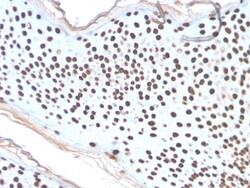
Biotium Histone H1 (Pan Nuclear Marker)(AE-4), Biotin conjugate, 0.1mg/mL
Please note that this antibody is a recombinant Rabbit version of original anti-histone H1 antibody (Clone AE-4). Because the variable heavy (VH) and variable light (VL) domains are the same, recombinant antibody has the same exact reactivity as the original AE-4 MAb. There are several advantages of producing a recombinant version of a monoclonal antibody. For example, a recombinant antibody is a pure preparation of active immunoglobulin with no contaminating non-functional intact Ig or free light/heavy chains. Secondly, antibody can always be produced, even if hybridoma line is lost. Moreover, it adds the flexibility of converting the antibody to any species, isotype or format. Eukaryotic histones are basic and water-soluble nuclear proteins that form hetero-octameric nucleosome particles by wrapping 146 base pairs of DNA in a left-handed super-helical turn sequentially to form chromosomal fiber. Two molecules of each of the four core histones (H2A, H2B, H3, and H4) form the
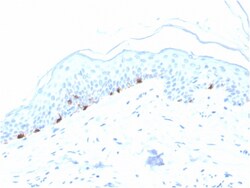
Biotium Tyrosinase-Related Protein-1 (TYRP-1) (Melanoma Marker)(TYRP1/3280), 0.2mg/mL
Reacts with a 75 kDa melanocyte-specific gene product, identified as Tyrosinase-related protein-1 (TRP-1). It is involved in melanin synthesis. TRP1 is present on the melanosomal membranes of melanoma, normal melanocytes and nevi. Recent evidence suggests that TRP-1 is involved in maintaining stability of tyrosinase protein and modulating its catalytic activity. TRP-1 is also involved in maintenance of melanosome ultrastructure and affects melanocyte proliferation and cell death. Primary antibodies are available purified, or with a selection of fluorescent CF Dyes and other labels. CF Dyes offer exceptional brightness and photostability. Note: Conjugates of blue fluorescent dyes like CF405S and CF405M are not recommended for detecting low abundance targets, because blue dyes have lower fluorescence and can give higher non-specific background than other dye colors.
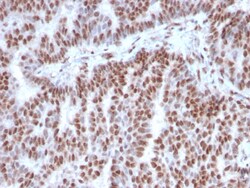
Biotium Estrogen Receptor, alpha (Marker of Estrogen Dependence)(ESR1/3342), 1mg/mL
This monoclonal antibody is specific to estrogen receptor alpha (ER alpha) and shows minimal cross-reaction with other members of the family. ER is an important regulator of growth and differentiation in the mammary gland. Presence of ER in breast tumors indicates an increased likelihood of response to anti-estrogen (e. g. tamoxifen) therapy. It strongly stains nuclei of epithelial cells in breast carcinomas. Primary antibodies are available purified, or with a selection of fluorescent CF Dyes and other labels. CF Dyes offer exceptional brightness and photostability. Note: Conjugates of blue fluorescent dyes like CF405S and CF405M are not recommended for detecting low abundance targets, because blue dyes have lower fluorescence and can give higher non-specific background than other dye colors.
Biotium GITR / Tnfrsf18 (Mouse)(DTA-1), CF740 conjugate, 0.1mg/mL
GITR (glucocorticoid-induced TNFR-related gene) is a member of the TNF-receptor superfamily, also known as TNFRSF18. It is expressed at low levels on resting T lymphocytes and at high levels on CD25 CD4 Tregs. The expression of GITR on T cells can be upregulated upon activation. Interaction of GITR with its ligand (GITRL) has been demonstrated to augment T cell activation, proliferation, cytokine production as well as MAPKs and NF-B activation, and abrogate the inhibitory function ofCD25 CD4 Tregs. In vivo activation of GITR causes development of autoimmune diseases and restores the suppressed immune response.

Immunology Consultants anti-Dog CRP Antibody (Mouse - 14D3) - Monoclonal
Clone 14D3 targets a unique CRP epitope, supporting precise detection in immunoassays. Its strong affinity and clean signal make it suitable for veterinary biomarker studies, diagnostic assay development, and inflammation monitoring. MCRP‑40A‑14D3 provides reproducible performance across serum, plasma, and purified CRP preparations, ensuring reliable quantification in research and clinical workflows
Immunology Consultants anti-Dog CRP Antibody (Mouse - Clone #14H5) - Monoclonal
This monoclonal antibody recognizes a distinct canine CRP epitope, enabling sensitive detection in ELISA, Western blotting, and antigen‑capture assays. Clone 14H5 offers strong affinity, low nonspecific binding, and consistent lot‑to‑lot performance. It is well suited for veterinary diagnostics, inflammation research, and studies evaluating CRP as a biomarker of disease progression or therapeutic response.
Immunology Consultants anti-Dog CRP Antibody (Mouse - Clone #14A2) - Monoclonal
This monoclonal antibody provides sensitive, specific detection of canine C‑reactive protein (CRP), a major acute‑phase biomarker. Clone 14A2 performs reliably in ELISA, Western blotting, and antigen‑capture assays, offering strong affinity and low background. It is ideal for veterinary diagnostics, inflammation research, and monitoring CRP levels in canine serum or plasma. MCRP‑40A‑14A2 delivers consistent, high‑clarity performance across repeated assays.
Vector Laboratories Monoclonal Mouse Anti‑Dog IgG Secondary Antibody (clone DIG12‑255.5) LS‑C152977, 100ug
Dog IgG antibody LS-C152977 is an unconjugated mouse monoclonal antibody. Validated for ELISA.

Vector Laboratories Monoclonal Mouse Anti‑Dog IgG Secondary Antibody (clone DIG11‑127.2) LS‑C760090, 100ug
Dog IgG antibody LS-C760090 is an unconjugated mouse monoclonal antibody. Validated for ELISA.